Subscribe
Share
Share
Embed
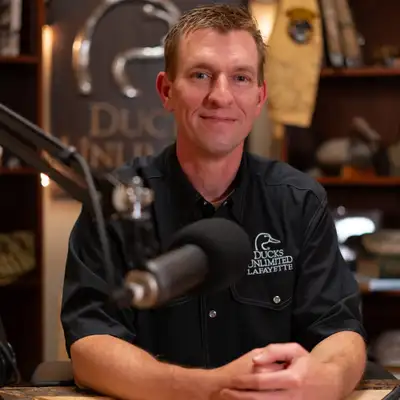
Ducks Unlimited Podcast is a constant discussion of all things waterfowl; from in-depth hunting tips and tactics, to waterfowl biology, research, science, and habitat updates. The DU Podcast is the go-to resource for waterfowl hunters and conservationists. Ducks Unlimited is the world's leader in wetlands conservation.
Everyone join us on today's episode as we sit down with the creators of Waterfowl Management Academy. On this episode, we learn about spring habitat for waterfowl, why it's so important, and what you can do to provide a better landscape, better conditions for ducks as they start heading back to breed.
VO:The following episode of the DU Podcast features a video component. For the full experience, visit the Ducks Unlimited channel on YouTube, subscribe, and enjoy.
VO:Can we do a mic check, please? Everybody, welcome back to the Ducks Unlimited Podcast. I'm your host, doctor Mike Brasher. I'm your host, Katie Burke. I'm your host, doctor Jerad Henson. And I'm your host, Matt Harrison. Welcome to the Ducks Unlimited Podcast, the only podcast about all things waterfowl. From hunting insights to science based discussions about ducks, geese, and issues affecting waterfowl and wetlands conservation in North America. The DU Podcast, sponsored by Purina Pro Plan, the official performance dog food of Ducks Unlimited. Purina Pro Plan, always advancing. Also proudly sponsored by Bird Dog Whiskey and Cocktails. Whether you're winding down with your best friend or celebrating with your favorite crew, Bird Dog brings award winning flavor to every moment. Enjoy responsibly.
Mike Brasher:Hey everyone, welcome back. I am your host on this episode, Doctor. Mike Brasher, and I'm excited to be joined by some folks that care an awful lot about ducks and duck habitat. And they're going to share with you an exciting new project that they're working on to help other people do great things for ducks and duck habitat, and that's those are the type of things that we all need to do more of. This is a group that's associated with a new project called Waterfowl Management Academy.
Mike Brasher:I have three folks joining us, Kale Flaspoehler, Mike Flaspoehler. There is some relationship there. We'll talk about that here in a moment. And then Dan Crigler. Kale, Mike, and Dan, thank you guys for joining us.
Mike Flaspoehler:Thank you. Thank you, sir.
Mike Brasher:I'm gonna start off and, Water Fowl Management Academy, we're gonna do your introductions, who you are, your background, all that type stuff here in a moment. But, Kale, I wanna go right to you and tell people what this project is. Waterfowl Management Academy, the URL is waterfowlmanagement.com. What is this about?
Kale Flaspoehler:Yeah. So this project started kind of as an idea that was pretty self serving in nature, and so, you know, by trade, I'm not a biologist. I grew up with everybody in my world being a waterfowl biologist except for myself, pretty much. Maybe I should have been, but that's a story for another time. But I spent a lot of time, you know, in in later high school years and through college working on a family friend's marsh.
Kale Flaspoehler:And so obviously had great teachers to help me with that. But as I was doing that, I would be sitting on the tractor all the time, and I'd be looking at things, and I'd be like, what the heck is that? Like, what do I need to do here? So I had the best resource in the world because I'd just pick up the phone and say, hey, dad, Danny, what do I do? And they're just like, Do this.
Kale Flaspoehler:And so, you know, I would go home, and I would research things, and I would try to find stuff and try to do some self learning there. And it was never available as easily as I wanted it to be. And, like, you know, it hadn't really caught up at the time to being able to just Google some of these things about drawdown and moist soil in a way that I needed it to be to help, you know, on our marsh. And so, you know, about eighteen months ago now, I finally was like, you know what? Let's just try to create that.
Kale Flaspoehler:And so, you know, so I called everybody, and I kinda got everybody together. Braylen is is not with us today, but she's a core member of our team to make everything pretty. But really, I just wanted to be able to document this information really for myself because I have the answer in my back pocket every day, all the time, you know. And so we wanted to put that out there in the world where if I need this, like, there's lots of other people that need this because I grew up in a house where dad came home from work and I marched every single day. And so if I didn't know the answer, like, there's lots of other people that probably don't either.
Kale Flaspoehler:And so it started as a way for, you know, myself to capture the information that I want to have available to me, you know, in the future. But also, we were like, surely that there this is there's a market out here for people that that want that as well. And so that's really how it it came to be. That was the premise, the idea, and just been very blessed that everybody decided to attach themselves to the concept and and push this push this forward together.
Mike Brasher:The website is waterfowlmanagement.com. And, Kale, we've talked to you and your team about this on several occasions, trying to find an opportunity or looking to see if there are opportunities for Ducks Unlimited and your group to partner, and, this is the type of information that we love to provide to our members, the people that care about ducks and duck habitat, and improving it and conserving it, and you guys and gals have sort of taken some steps out there and are assembling and creating the content. It's not an easy thing. It takes a lot of time. You've got, as we're gonna hear in just a moment, decades of in the field experience behind what you're doing, and I think it's a wonderful thing to try to make this information accessible in an online format for people that want to know how to do this.
Mike Brasher:They now have a place, and there's others out there. This is one that y'all have You're getting very strategic about it, and very structured, and organized, and I think it's another phenomenal resource for people to have, and I wanna hear about sort of, well, will people from different regions be able to find the information that they need? Because y'all are based in Missouri. There are people all across the country that are concerned about these things. I want to introduce Mike Flaspoehler, your dad, Kale, your dad.
Mike Brasher:So Mike, introduce yourself. What's your background and how'd you get I mean, I'd ask you how you got roped into this. Your your son comes to you with an idea and says, dad, I I need your help. You're not gonna say no, especially if it's something that you that you you share a love for. Tell us about yourself.
Mike Flaspoehler:Right. Yeah. Kind of early on, I I was fortunate. I grew up in North Central Missouri along the Missouri River, an area that's been rich in waterfowl history for a long time and and good fishing as well. And so had had family that was very involved in the waterfowl hunting and fishing type of activities, and so I developed that interest early on.
Mike Flaspoehler:Especially waterfowl hunting. I I kinda got started really around the Swan Lake National Wildlife Refuge, which was historically known for some of the best Canada goose hunting in the country at the time. And that kinda led on through high school. I decided that I wanted to pursue a career in in wildlife management. And so I took a took the opportunity to go to school at the University of Missouri.
Mike Flaspoehler:I got a degree in fisheries and wildlife management from there. And then I bailed out straight straight into a job and was fortunate enough to have a job available for me right out of school. I started in January 1 right after I graduated in December, and I worked for the Missouri Department of Conservation for thirty four years from that day forward and spent all of that time in public land wildlife management. My goal I knew that early on too. I I had that waterfowl interest, and so I was gonna continue trying to push for waterfowl kind of positions.
Mike Flaspoehler:But I took every opportunity I could to promote to different jobs, moved around the state. And in that time, was always trying to find the best fit for me to get experience in waterfowl just to kinda set up my career. And through that, I managed to work a couple years on the Grand Pass Conservation Area, which a lot of listeners will be familiar with, I'm sure. And then I went from there to 4 Rivers in Southwest Missouri, one of the larger wetland complexes in the state, and that was a really cool opportunity. Was in some of the early stages of developing their public hunting program on the area at the time.
Mike Flaspoehler:So I got got involved with that. And then I went to back to Northeast Missouri, which is kinda where I started my career, and took a position up there where I spent the last almost eighteen years managing the Ted Shanks Conservation Area. And it was a really unique opportunity because it, like so many areas, got really hammered by the ninety three flood. Mississippi River, that portion is a pooled section, so it deals with a lot of impounded water that you can't get rid of necessarily over, you know, long periods of time. And so that really devastated the habitat, and it gave me an opportunity to kinda take a position that had an open door for a lot of a lot of kind of exciting restoration type of work and spent several years working working through that and doing a lot
Mike Brasher:of habitat restoration on the area. So you have you've spent a lot of time in different wetland systems. You do everything from writing strategic plans to driving a tractor, driving a bush hog. Have you done it all?
Mike Flaspoehler:I have. Yes. And still like to. If I can get Cal out of the tractor on the wetland we work on at home, I I still like to get on tractor occasionally.
Mike Brasher:Well, that was gonna be my question. What is now that you are you're retired. Right? Fully retired. Yes.
Mike Brasher:Now that you're fully retired, what's your favorite thing to go back and do? It's probably not to write strategic plans.
Mike Flaspoehler:Well, you know, it it does take a little bit getting back into that, but working with the state, of course, you know, there's a lot of plan writing goes on. So it's still there. You have to get back into it and work at it a little bit. But, no, I I really do enjoy that. And when I say I'm fully retired, I was fortunate again to get to have family that that had a lot of farm activity around that same park.
Mike Flaspoehler:And so I I had the chance to go back and start helping on family farm, and that's what I do a lot of now. So so I actually do get a fair amount of tractor combine experience, and usually I'm on the combine when Kale's calling me, hey. What do I do in this spot? So yeah.
Kale Flaspoehler:That's it's funny we built a it's funny we built a library to solve my problems, but I still call you. You.
Mike Brasher:Yeah. Yeah. That's right. That's awesome. Dan, let's let's talk to you a little bit about your background, a lot of wetland management experience as well, and then how do you two how do you know these other two fellows here?
Dan Crigler:So Michael and I go a long way back, and we worked together for quite some time with the Missouri Department of Conservation. And just a quick little note about Michael. He landed at Shanks, and probably the peak fall migration there was between twenty five and fifty thousand ducks, and 50,000 maybe stretching it, he turned it to almost 200,000. So Michael is an outstanding wetland manager, and I'd put him up against anybody in the country. So Yeah.
Dan Crigler:That's my position on him. And Kale, you know, he came later, but we became friends. We do a lot of hunting together and and share time together with Waterfowl Management Academy. And, you know, it's just you know, I feel like they're my extended family, so that's how close we are. And their brother or Michael's brother, Mark, is one of my best buddies.
Dan Crigler:So so, anyway, that's kind of the tie there. So I've had the opportunity to build an exciting and thorough career that I can actually look over my shoulder like we talked about earlier and not regret a thing. I'm gonna give a little shout out or should be a big shout out to Dick Vaught. He was a he was a supervisor of the wetlands section back in the late seventies and early eighties. He was my mentor and just an outstanding person.
Dan Crigler:And I'll tell the young listeners out there that if you're looking for a career in conservation, try to work every summer and build relationships with those agencies, whether it be state or federal, to gain that experience to make you more competitive when you get to that job stage. Because that's what he did with me. He didn't have to, but he did. He took the time, and he, but I built that relationship with him, and so that's what happened, and it it really made it easier for me to get in. I still had to work hard to get that first job, but I I I obtained it.
Dan Crigler:So, anyway, I started, back in the eighties. I went to college at Truman State University, got a bachelor's and a master's degree there. I worked thirty years for in both public and private land with the Missouri Department of Conservation. Private land is was really my calling because the last fifteen years, I worked in private land. So I took the all that knowledge that I gained from all these experts and wonderful teachers and mentors, and I gave it to private landowners.
Dan Crigler:And I was happy to. We take our we take our expertise for granted. All four of us have that tendency. So I I've tried to remove that that block and and share with people, and this is really what the Waterfowl Management Academy is about too. So but I gave back to private landowners, and they were so appreciative.
Dan Crigler:They were so thrilled and excited about, you know, the technical expertise that I could provide them and they could apply on the landscape. You know, it was just a win win across the board. So that was very fun, very exciting. One of the highlights on public land was working at Duck Creek Conservation Area, which is adjacent to Mingo National Wildlife Refuge in Southeast Missouri. Doctor Lee Fredrickson was there, an awesome person.
Dan Crigler:He was doing more soil management studies with graduate students that I became friends with, and I would try to replicate some of the things they were doing. Although it was experimental, they would get me excited about what they were finding out. I'd I'd applied run out and applied on Duck Creek, and based on one of those applications, which was it was a cocklebur area, and we completely reverted it to we disc it, and then we reflooded it, then saturated the soil, got panic grass and sedges, and we had one of the best teal seasons we've ever had at that time. So that was really a cool time for me to learn and grow with Lee and the students, and it was a really great time of my career. So then after thirty years doing that, I decided to retire.
Dan Crigler:You know? It's kinda thirty years, you kinda think about it. So I I was in the process, and so the fish US Fish and Wildlife Service came to me and said, hey. We've got a job over here. Would you be interested?
Dan Crigler:And so I sat down with Cindy, and we got the roundtable, pros and cons, you know, that kind of thing. Cindy's my wife. And so we said, okay. Let's try it. So we did it, and I was I worked in on Eastern Side Of Missouri along the Mississippi from Northeast all the way to the Boothill.
Dan Crigler:One of the opportunities I had with the Fish and Wildlife Service, besides the growth opportunity for me, the big picture, I learned a lot from from my supervisor, Kelly Shrigley Warner. She was she was awesome too. But but I had the opportunity to work in a wetland private wetland complex that is in the top three in the country. It's called the Confluence, and it's where the Mississippi and the Missouri River come together. Tens of thousands of acres of private of private land, wetland areas, and these guys, most of them are really committed.
Dan Crigler:So when I got on board, I got in the network, and and we did a lot of restoration enhancement projects, And so it was, you know, it's it was an awesome experience. So that period of time passed. I'm getting ready to retire or, you know, get finish up the service, and the Great Rivers Habitat Alliance comes to me and said, hey. You know, we got a part time position. Would you like to work with us?
Dan Crigler:And Great Rivers Habitat Alliance is a not for profit conservation organization. They have a tremendously cool mission. They're awesome people. They're they're all about conservation and conserving wetlands in the confluence, all these tens of thousands of acres. So they have a board, and they have that governs the the organization.
Dan Crigler:And so please, listeners, take a look at them, grha.org. They have a wonderful mission. Take a look at them. And again, we're we're giving back. They're right now, the first year, we had a hunting program.
Dan Crigler:So we had youth hunters, we had veteran hunters, we had first responder hunters, we had young adults, first time hunters. So we're we're we're trying to incorporate that within that goal or or that that objective for Great River Habitat Alliance, and they're making it happen. I'm the manager of the habitat on this 800 acre track, and I'm running the management or the hunting program. And so, anyway, that kinda wraps things up, but I, you know, I've had a I've had a great career and a great time.
Mike Brasher:You described Mike as one of, if not the best, Habitat manager that you've ever known. What when you've watched him, what has made him such a great manager? What's the secret? Then I'm gonna ask him what he thinks about that.
Dan Crigler:What I think is, you know, Michael is a he's one of these people he's a lifelong learner. We're kinda alike in a lot of ways, but he's he's a lifelong learner, so he's just like a sponge. He's constantly listening to the research side of things. He's applying research to the manage to the management part on the landscape, so he's applying some of these research techniques. He's observant.
Dan Crigler:You know, he's walking the talk. He's going out there. He's looking at what's going on. You know, he's he's doing sampling, he's doing transects, so he's backing up everything that he's doing. He's and and he's experimenting.
Dan Crigler:He's willing to experiment with different techniques and watch how the birds respond to it, making notes, you know, kind of that process where you're keeping track of what you're doing, and then if you find something that really works well, you simply repeat it. And and it just you know, it's so I think just and and hard worker. I mean, we look across the board, we look for people that know how to work. Michael knows how to work, and he he's very good at building relationships with people. So just a well rounded biologist that that has a lot of good characteristics and and, you know, is good at what he does.
Mike Brasher:So, Michael, it sounds like if I didn't if I didn't know better, I would say you you either came from or shared in or influenced the the Dale Humberg kinda school of thought on how to kinda keep track of things, how to evaluate actions and the responses you get from those actions. You probably know Dale pretty well, don't you?
Mike Flaspoehler:Yeah. Actually, I do, and and Danny and I both know him very well. So, yeah, he's he's another one of those tremendous assets that we had not only in Missouri. He went to DU for know, worked for you guys for several years and was a true asset to the waterfowl world, basically. And so, yeah, and we've been blessed in Missouri.
Mike Flaspoehler:We've had a lot of good folks like Danny's already mentioned. So, yeah, Dale's a good one to follow. I actually worked a little bit while I was in school at Columbia. I I helped do data entry and stuff like that for for Dale and Dave Graber at the time. They probably didn't like me in there because I was full of questions all the time.
Mike Flaspoehler:I asked them, well, what what about this or what about that instead of doing data entry.
Mike Brasher:But but
Mike Flaspoehler:we had a lot of good discussions, I think. And so yeah. You know? And it's it's important. As Danny said, you know, you do things, not everything works, and, you know, you have to learn from it.
Mike Flaspoehler:And so trial and error is a big part of it. And I I will say that it's, you know, it's been a a blessing to work on large scale public wetlands because for one, not that everything's an experiment, but certainly you have the landscape where you can try some things. And and in cases, you know, maybe you have problems that you just have to address, and and you're gonna experiment to try to find the best solution to the problem. And, you know, one of my faced, and Dana and I have talked about it a lot on Shanks, was we lost over 2,000 acres of bottomland timber after the ninety three flood, and it came back to all reed canary grass. And so it was like a 2,000 acre block of reed canary grass, and we just started attacking it.
Mike Flaspoehler:You know? And we learned things as we went. We just knew what we had wasn't good, and we were gonna convert it. And so we did. We we worked on it for several years, and we ended up converting that to a very productive part of the part of the area and and a very used part of the area by waterfowl.
Mike Brasher:Guys, it it's rare that I have a conversation about Missouri and Missouri Department of Conservation when when I don't ask about, about Ken Babcock, and I'd love to tell stories about Ken Babcock. I'd really love it if we told stories about Ken Babcock, whether they're true or not, and then he'd listen to them. But I don't know if he listened to podcast. So we're not going to spend a whole lot of time talking about Ken. Maybe we'll make sure he hears this anyway, but no.
Mike Brasher:He is a great friend of all of ours, another in the long line of incredible duckaholics as he famously introduced himself as one day, and I admire that, I try to embody that, but I can't come close to the accomplishments and accolades of a lot of you guys and the amount of time and contributions that you've made to improving the management of the habitat that these birds rely on and that we, as hunters and just general lovers these birds and all the other animals that those wetlands support really, really appreciate. So we have a lot of I I can tell already that we could have like a two hour long discussion. What I think I wanna do is take a break. We have something that we wanna talk about, one of the primary themes, one of the primary initiatives that y'all are pushing right now is on the importance of spring habitat, so I wanna get to that, and I can see an opportunity for us in the future to come back and talk about other things related to what you're doing. So I think what we'll do right now, we'll come back, take a break, we'll come back, and then we're gonna get right into this idea of spring habitat, why it's so important, and what kind of material y'all are putting out to help other people understand that and deliver it on their property.
Mike Brasher:Stay with us, folks.
VO:Stay tuned to the Ducks Unlimited Podcast sponsored by Purina Pro Plan and Bird Dog Whiskey after these messages.
Mike Brasher:Hey everyone, welcome back. We are here with three folks that have this really exciting new initiative, Waterfowl Management Academy. Waterfowlmanagement.com is an online resource where they bring decades of knowledge of wetland management to you to help you improve what you're doing on your property, learn how you can improve what you're doing on your property to benefit waterfowl, other waterbirds, and then, of course, the way you interact with those birds as hunters or however else that may be. Those three individuals are Cale Flaspoehler, his father, Michael Flaspolar, then Dan Kriegler. Cale, talk with us about the initiative that you've got going right now, and I'll preface this by saying one of the things that I found really cool is that you're kind of developing these themes of the content that you're putting out, and I'm pretty sure that you're kind of timing these to go along with the annual cycle of the birds.
Mike Brasher:We're recording this on February 27, and ducks are starting to think about breeding right now. They're starting to think about getting back north and getting on those nests and hatching those babies and all that type stuff. What is the theme, and then why is this so important to y'all in advocating for this right now?
Kale Flaspoehler:Yeah. The Spring Habitat Campaign is something that we dreamed up kinda at the beginning of this, and it's been something that we've discussed for a very, very long time. And, you know, my uncle Mark, longtime DU employee, probably put it the best. He said, you know, in the fall, we're kind of taking away. We're kind of taking away from that resource.
Kale Flaspoehler:But, you know, if we have the opportunity in the spring, that's our chance to give back and to feel good about, you know, the work that we're doing. And so, you know, there's very simple things that can actually make a massive impact to waterfowl as a whole if we can get it implemented at a broad scale. And it's been encouraging over the years, and I credit that to, you know, a lot of the work that y'all are doing, and, you know, Cohen and Doctor. Osborne are doing, and various folks like that that are putting out information that are taking hold, and people are really, really trying to do a good job. And so, you know, we just wanted to start the Spring Habitat campaign to help people understand and also implement that on their property because, you know, it's been my experience that if you don't know and you're not exposed to it, how are you supposed to know?
Kale Flaspoehler:And so that's really the whole goal here is that, you know, for the entire month of February, we're just gonna spam people with Spring Habitat stuff, and hopefully we can, over the years, build that into something that truly does resonate with folks. And so that's really what the Spring Habitat campaign is. We're just talking about what does it look like, why is it important, how do you do it on your property, you know, and, you know, those kind of things.
Mike Brasher:From the why is it important standpoint, before we started recording, you asked me if I'd seen any snow geese whenever I've been outside the past couple of days, and I've been in Downtown Nashville, so not a whole lot of snow geese flying over there, but this is the time of year when you can observe some pretty remarkable phenomena if you're in the right place on the right day, and you see strings of snow geese just nonstop heading back north, and you get a strong south wind, and those birds pick up on it, and they just go by the hundreds of thousands. They've got getting back north on their mind, and they have habitat needs and resource needs during this time of the year that probably differ a little bit from what we typically think of whenever we're trying to manage habitat that we're gonna hunt these birds over. Kale, I know you and I were trading emails, and one of the things that I have heard and dealt with sort of repeatedly in various places that I've worked is this idea of as soon as the hunting season is over, hunters are especially if it's property that they have leased, especially if it's agricultural land that they've leased, but a lot of times not going into agricultural production, and they will make the remark that, well, the season's over, it's time to pull the boards and start preparing for next season.
Mike Brasher:Well, the next season for ducks is just getting started. That next season for ducks is them getting back to the breeding grounds. And so I know the three of us, and others as well, would love to see more of that habitat, more of that water retained on the landscape a little bit farther than the end of the duck season. Now, there's all sorts of concerns to be had from different types of wetlands, if you're talking forested wetlands especially, that brings in some additional concerns about how long you're keeping all that water on, but where the vegetation community can kinda handle it and where it's beneficial, I mean, that's to me, that would be a great thing if we get to a place where the education and understanding of the importance of that allows people to keep water out there a little bit longer. Danny, I want you to talk about the importance of that, and then and, Michael, I'll I'll get your thoughts on on it as well.
Dan Crigler:I think you nailed it, Mike. I mean, emphasizing spring habitat for the life history of and we'll do let's just talk puddle ducks. We know there's it goes beyond puddle ducks, but let's focus on puddle ducks. It's critical spring habitat. I'll talk about Missouri, but I can really kinda represent the entire flyway in terms of scale if you wanna talk about spring habitat.
Dan Crigler:What's what happens during the spring is if the table's set correctly, four to 10 inches of water, optimum feeding depth for puddle ducks, you have an opportunity. If you have moist soil vegetation or if you have forested wetlands, again, we can talk about the drawdown part on that. He needs to be a little sooner. But but right now, if you have herbaceous or nonwoody plants in your wetland that you've created that are naturally occurring moist soil plants, they are breaking down. Okay?
Dan Crigler:They're breaking down, and when the temperatures warm up, you have a flush of invertebrates. Those are small insect and animal larvae that the birds need. They're high in protein, and four to 10 inches of water is gonna allow them efficient feeding. It's gonna concentrate though that food source, and it's critical for their life history. We'll we'll talk about that in a minute here on on how crazy it is, on on how many things that these birds need to do besides migrate.
Dan Crigler:You know, we're talking about birds flying and migrating, but there's a lot of other things that happen to these birds they need energy for. Another thing is if you have that table set in the spring, there's also residual seeds that are occurring from naturally occurring moist soil vegetation and plants that offer such good nutrition. I mean, if you have seven to diff seven to 10 different types of moist soil plants that produce different seeds, that provide different percentages of certain nutrients and nutrition, think about how cool that is. I mean, that's why you're contributing. That's why we all as a team, the listeners, everyone as a team needs to focus on providing that spring habitat.
Dan Crigler:Because as the birds refuel and they're stacking up, you know, their their their muscle development and all this nutrition, it's gonna put them in better shape when they go north, when they're headed to that those breeding grounds, more eggs. They've they've gotta they've gotta fly up there. They've gotta initiate nesting. They have to develop the eggs, lay the eggs, brood you know, raise the brood, molt, and I probably left some of the things out. But think about to the listeners, think about how many how much energy that's gonna require.
Dan Crigler:So if you play your part, you've got a 100 acres, you can leave 20% in herbaceous wetland plants and allow the invertebrates to be in there and to provide those that seeds, those residual seeds, that nutrition base, you're doing your part to to try to make that production better for waterfowl. We're we're all hedging our bets, right, as a team. So that's to me, that's what's so critical. And then invertebrates, they're they're throughout the whole thing. I mean, they're they're on the breeding grounds for for the ducklings when they come off, when the for the broods.
Dan Crigler:And then during the fall, we can get a bloom of invertebrates, which which is additional food. Maybe not as much during the wintertime, but then in the spring again, they're they're very important. So that's why spring habitat is so important because it is a huge component of producing more ducks.
Mike Brasher:Their the the nutritional requirements for ducks this time of year and into the summer are more complex than what they are from, let's say, fall through mid, late winter. The activities that they engage in are more numerous and varied from migration to courtship to to egg laying, all and then brood rearing even on beyond that, re nesting, if you're talking about re nesting, the better, the earlier they arrive, the better condition they're in whenever they arrive, the more likely they are to renest if the conditions on the breeding grounds are are conducive to that. So it's just like I said, this is the this is the start of the most critical time period of the year for these ducks. That's probably for me, that would be one of the most important takeaways. We we as hunters think most about how we're managing habitat in anticipation of the birds getting down here during fall and winter.
Mike Brasher:That's a pretty simple time period for them from the resources that they need and what it is that they're doing and how that contributes to the overall population growth and life cycle. Right now and over the next three, four months, five months is the absolute most critical, and it's the one that has, from a habitat management standpoint, especially in the private sector, has received the, I think it's fair to say, well, know it is, the least amount of attention. So Michael, you've dealt with this, thought about this a lot as a manager of publicly owned wetlands. You, I think you probably feel in your position, you had a greater obligation to sort of be the standard bearer for what that looks like. What are some of the key challenges that you faced, and what do you tell people on how to overcome those whenever they're dealing with sort of the limited options that they have as a private individual?
Mike Flaspoehler:Right. And I think that's that's a very key point that, you know, we've relied on the state and federal refuge systems in in WMAs, waterfowl management areas or wildlife management areas, you know, up and down the fly you know, that's that's been the sole provider in a lot of cases for this quality spring habitat that we need. And Danny's mentioned earlier that the Confluence area has done a good job. There's a lot of folks down there, I think, that are starting to to certainly figure out that value and importance as well. And so, you know, I would like to stress the idea that in order for us to be better than what we have been, we have to expand it out to private lands.
Mike Flaspoehler:I know there's a Kale may have mentioned it already, but we know 75 to 80% of that wetland habitat on the landscape is on private land. And so, you know, that that just tells you if we really wanna have a big impact, we're gonna have to infiltrate that private land and and get them to start thinking about it. But having been in the public lands area for a long time, I I heard all the time, and you just mentioned it earlier, comments, when you get to the end of the duck season, you'd hear somebody in in the crowd maybe at the morning draw indicates like, well, yeah, I'm gonna go pull my boards tomorrow. You know? And it's like, why?
Mike Flaspoehler:You know? There's no reason for that. You need to you need to maintain that. And so, you know, you try to have discussions with folks like that. And and it's important to understand, you know, there are folks that their wetland is is probably an agricultural field, and they're putting water on it, and it's targeted for waterfowl hunting.
Mike Flaspoehler:And if that's important for them in order to be able to do that, you know, we we're not faulting them for that. We're not saying that's wrong. We're just trying to push them to that next step and say, hey. Why don't you add in there's a little bit of that that's wet. Why don't you add that lower 10 acres into moist soil and try to hold water there?
Mike Flaspoehler:Just a different kind of a mindset, if you will, I guess. But but there certainly are some that are gonna continue to to pull their boards, and that's important to their bottom line. And we'd rather see them put fall habitat out than no habitats for sure. So so I think that's the challenge again is getting past that mindset right now with folks trying to get them to leave some water on until the spring. And then, you know, you'll hear us, especially habitat folks in general, we're always talking about diversity.
Mike Flaspoehler:Right? We wanna have that diverse habitat. And so I think it's important in this spring migration period to kinda kinda figure out or not figure out, but see that there's also differences between February 20 when birds are starting to move north maybe in a warmer year than March 20 or something. You know, there there are certainly different habitat needs. And and so some of those early migrants that are going back or maybe even some of the birds that stage farther north, they're they're gonna still be fighting some tough conditions.
Mike Flaspoehler:So we have to put out habitat that's not just necessarily what we would think of as spring. Maybe keep some of your your high energy foods available for those birds because they're gonna still deal with tough conditions this time of year.
Mike Brasher:You know, I've I've heard Dale Humberg talk I check-in with him periodically. He's got some a complex of wetlands that he and some others manage and hunt, and I know they try to keep water on into the spring, and I check-in with him occasionally, and obviously we talk about hunting, but I'll be honest, when I when I talk with him, I sense that he gets almost almost as much. He might tell me that I'm wrong, but I I sense that he gets almost as much enjoyment out of seeing the birds use his wetlands in the spring as he does in the fall and winter when he's out there hunting them because there's a sense of accomplishment and gratitude that what he is doing is beneficial well beyond just the opportunity that it provides to hunt the birds that they love so much, that they grew up doing. That's why we've gotten into this, that we love that. But Dale gets a level of appreciation and a giving back, Dan, as you said earlier, that is different from what is experienced in the fall and winter, and I think part of it may be is that that time of year, you have an entirely different suite of wetland dependent birds that are migrating back through shorebirds of all different sizes, wading birds that come in there, and and the area is not as disturbed through the as a result of human activities associated with hunting, and you're able to see these birds natural setting and the diversity of the birds and what they're doing and they're in their breeding plumage, they're doing the things that have made them some of the most magnificent creatures and admired creatures on the planet, and you're able to see that and you have some satisfaction in knowing that that habitat that I put out there that allows me to go hunting in the fall and winter, if I leave the water on there a little bit longer, I think I can experience an entirely different aspect of this community of wetland birds.
Mike Brasher:Am I am I close?
Mike Flaspoehler:Absolutely. Yeah. You've nailed a whole bunch of key points there. I mean, it's unbelievable, the spring migration, and, you know, you mentioned it earlier about the snow geese migrating, you know, and just seeing hundreds of thousands of birds moving. You know, it's just incredible.
Mike Flaspoehler:And the same in the spring. And I think one of the things you you've said there that's it's, like, really crucial is is you get the chance in the spring if you take time to go out and watch those birds, especially as a landowner, to see birds at at the pristine time. They're like you said, they're in their full breeding plumage. They're absolutely beautiful. They're going through a lot of courtship behavior still.
Mike Flaspoehler:You'll see them doing courtship flights, all kinds of stuff that you don't always see. And if you're hunting, you know, a lot of times we don't wait around long enough to see those kinds of things. You know? If they get in range, we're shooting. Right?
Mike Flaspoehler:And so for that fall, or the spring habitat, springtime is is cool because you're just out there observing. You're watching. You really are. Takes a little bit of the the stress away from it, I guess.
Dan Crigler:Mike, I just wanted to add real quick. One of the key things here too, just from a big picture standpoint, and I'm sure Dale is is locked in on this as well, is there's a lot of those species that arrive during spring migration in the fall too, but we're focused on spring, that are in trouble. So not only is he getting satisfaction from the visual aesthetics of watching these birds and seeing them, but he knows he's contributing to their life history as well, and they need support. Shorebirds are a good example. Yeah.
Mike Brasher:Yeah. Absolutely. And it's a time of year when if it's been a hard winter, if it's been a drought year like what we have have had in the Mississippi Alluvial Valley this year, it's been it's been tough for a lot of a lot of those birds, and that extra habitat, that extra length of time that it's on there, when you provide good habitat for ducks, they can they can recover from poor condition pretty quick. And so you're providing that also. You're getting those birds a time to recover, and as you said, other groups of birds that far are worse than ducks, you're benefiting from as well.
Mike Brasher:Kale, what has been the I know you've just kinda started this month, the Spring Habitat Initiative. What has been the response thus far, either to the website or to any of the contacts and people reaching out to you? Just sort of all encompassing, what's been the reaction? What's sort of some of the more exciting things that have come from this?
Kale Flaspoehler:Yeah. No, I'm always excited when I get somebody to comment on a social post. Lots of this stuff comes from social media, and that just kind of seems like how people get their information now. But, you know, people have really resonated with this topic, people that are, hey, I've been doing this. You know?
Kale Flaspoehler:They're trying to say like, hey, I've been trying to tell people this. And so, you know, we get those a lot. We get pretty cool people that, you know, if you said their name, you would know who they are kind of people that are commenting on these posts saying, you know, hey, this is something that we need to do, and, you know, we need to learn more about this. And so it's encouraging to have those things hit. Sometimes it's difficult to take a first step when it's a small step, but, you know, we're hopeful that this will build.
Kale Flaspoehler:And we're hopeful that, you know, if we continue to do this each year, we get more buy in from folks, and it becomes like, you know, some of these other projects that are more mainstream now, like this transmitter data that's happening and stuff like that. We just want this to be a more mainstream part of the conversation, and it's exciting to me. I know that we didn't do this, but there's a wetland I drive past all the time that's never had spring water, and this year it does. And I know that that probably wasn't us, but, like, it's just nice to see that maybe that's happening at a more at a larger scale. And so that's that's part of what I'm excited about.
Mike Brasher:And and it could be two or three people removed from you. You may not have had a direct effect on it, but if somebody else is doing it because they did hear you and then they're communicating with that person, then maybe they try it. So it's the whole snowball effect, and and that would be a wonderful thing. Speaking of sort of a snowball effect, you guys are in Missouri. That's where your expertise has has been centered for a number of years.
Mike Brasher:For people that are that are listening to this and wondering about the relevancy of the material on this website for them, whether they're in coastal the the whether whether they're in the South Atlantic coastal region or the Central Valley Of California or the Gulf Coast, What is available now, and what's your long term plan for for trying to provide advice and resources to those folks as well?
Kale Flaspoehler:Yeah. So, you know, just to talk a little bit about relevance, like, there's all these little pockets of habitat across the country that, yeah, our Midwestern experience probably isn't gonna play into perfectly, but there's also a lot of things that does correlate. Right? Like, ducks need certain things at certain times of the year. The way they get it is probably different in certain regions, but they're still after a thing, right, at that time.
Kale Flaspoehler:And so there's lots of things out there that will be beneficial. And what I would encourage folks to do is if they want to interact with our stuff, we would rather interact than just have them sign in, watch the videos, and never chat with us. It's more fun to have questions. And we've built that into the platform is like, if you have a question, just send it in. They will talk to you about it.
Kale Flaspoehler:And so, you know, our long term plan is that as there's Central Valley Of California, all these different little places that you mentioned, Coastal Louisiana, various places like that that we would love to build content in. Once we, you know, once we get a really strong foundation and we feel like we've exhausted some of these topics out, we'll probably go out and work on some of these other more specific habitat types. It seems like though right now from where it's at, you guys tell me if I'm wrong and off base on this, but, you know, the moist soil management in the Midwest applies a lot of places, and so, you know, that's going to be our focus until we feel like we've exhausted that one.
Mike Flaspoehler:Yeah. I think yeah. I'd throw in on that. I think the concepts are the same. You know, maybe different plant community a little bit, maybe different timing in the year.
Mike Flaspoehler:You know, you got cold cold weather in Missouri and warmer weather in Louisiana, obviously, so you got those climate changes. But the concepts that we're talking about in a lot of cases are gonna be the same, just a matter of what time of the year you you kinda get involved with those. And so, you know, just for example, and we'll we'll help folks, you know, with suggestions on drawdowns. You know, if you're wanting to do moist soil management, you know, we'll we'll give you ideas on on the best timing and when to try to do your drawdowns and stuff like that. So concept's still the same.
Mike Flaspoehler:It might be a different part of the world, but it's still gonna have the same kinda impacts, I guess.
Dan Crigler:We're we're also willing to look at reference material, you know, go out there. If we don't know it, we're gonna say, okay. We really don't know. So we're gonna go out and find reference material so that, you know, that other people have done or had experience with. We're also gonna we'll we'll be able to reach out to state and federal contacts in those different states if we just can't reach it enough with the habitat and and where they're at.
Dan Crigler:So the Partners Fish and Wildlife program with the US Fish and Wildlife Service is nationwide. So and that's my background, my experience. So we have the expertise in networking. We can we can get folks information that they need.
Mike Brasher:That's all great. We're gonna start wrapping up here in just a moment. Waterfowl Management Academy. It's waterfowl management what was it? Waterfowlmanagement.com is the website.
Mike Brasher:I was looking at your social media page here on Instagram, your Waterfowl Management Academy. How can they find you on on other platforms, Kale?
Kale Flaspoehler:Yeah. So same same basic name. We're on all the main social media platforms, Waterfowl Management Academy. TikTok has its own weird one, waterfowl.m.a, I believe, because it was taken. But, anyway yeah.
Kale Flaspoehler:And then also, if you go to just waterfowlmanagement.com, that's that's gonna get you everywhere. Every all the socials are linked there and everything like that.
Mike Brasher:Michael, a question for you here to close out. So you chose a profession in waterfowl and wetland management. Kale, your son, didn't choose the exact same career, but now he has found this way to sort of follow in your footsteps, but in sort of a modern manner. How cool is that? What's been your reaction as you've seen him as you've seen him develop this idea and and implement it?
Mike Flaspoehler:It's it's really cool. You know, we're always proud of our children when they take positive steps in life, and and I would certainly consider this a very positive one for him. He he's in a a really good career where he's working right now, and and that's helped him a lot, I think, in terms of of his kind of foresight into how to set this WMA up for us and how he wants to to move that forward. So it's been really fun to work with him. And and as as his father, you know, it's fun to watch him kinda think through these processes and tell us where we need to be going, what we need to be doing, and and how to do it kinda thing from the business side.
Mike Flaspoehler:You know? And certainly, he he could tell you a lot of stories. He's he's followed around behind me for a lot of miles trucking trucking around in the mud. And, you know, so he's he certainly didn't become a waterfowl biologist, but he won't tell you a lot on the on the on the air here, but he is pretty pretty good wetland manager for sure.
Mike Brasher:Oh, I I'm sure you can't help but absorb some of that knowledge from the people as as talented as you, and and you have that opportunity to actually be in the field and do those things, and that's pretty cool. So if you, as a as a listener, as a viewer, are are intrigued intrigued by this idea of trying to diversify some of the habitat that you're providing to migratory waterfowl or other migratory waterbirds, wetland dependent birds, give this website, give these folks a look at waterfowlmanagement.com. There's a ton of other things that we could talk about. We could talk about a lot of the specifics. Managing wetlands for waterfowl or other wetland dependent birds, a lot goes into it, and there's a lot of sort of site specific considerations.
Mike Brasher:You guys are available for them to reach out to you for specific consultations if that be the case. But the first step is looking in to what you're providing, and I encourage folks to do that, and if we diversify and expand on the type of habitat and where we're providing that habitat and when we're providing it to support these birds, then everybody wins. Try to find those ways where you can try to find those ways where you can contribute, and here's a great resource to help you do Guys, thanks so much for joining us, and I'm sure we will have you back for a future episode.
Mike Flaspoehler:Thank you. Thank you. Thank you, sir.
Mike Brasher:A very special thanks to our guests on today's episode, Kale Flaspohler, Michael Flaspohler, and Dan Krigler. We greatly appreciate them bringing their expertise to us on this exciting new project, Waterfowl Management Academy. We thank our producer, Chris Isaac, for the great work that he does on these episodes, and we thank you for joining us either listening or viewing. We thank you for your support of wetlands and waterfowl conservation and especially spring habitat management.
VO:Thank you for listening to the DU Podcast sponsored by Purina Pro Plan, the official performance dog food of Ducks Unlimited. Purina Pro Plan, always advancing. Also proudly sponsored by Bird Dog Whiskey and Cocktails. Whether you're winding down with your best friend or celebrating with your favorite crew, Bird Dog brings award winning flavor to every moment. Enjoy responsibly. Be sure to rate, review, and subscribe to the show and visit ducks.org/dupodcast. Opinions expressed by guests do not necessarily reflect those of Ducks Unlimited. Until next time, stay tuned to the Ducks.